📸 Face Rock Scenic Viewpoint Photography Recommendations (Bandon Oregon)
Face Rock is one of the most inspiring places to photograph on the Oregon Coast, but capturing its full magic takes more than pointing your camera at the sea stack. This guide shares practical, creative tips—using leading lines, foreground elements, sun position, and wildlife—to help you create images that feel alive, balanced, and uniquely your own.
This is article is a practical, creative guide for making stronger images on one of Bandon’s most iconic beaches.

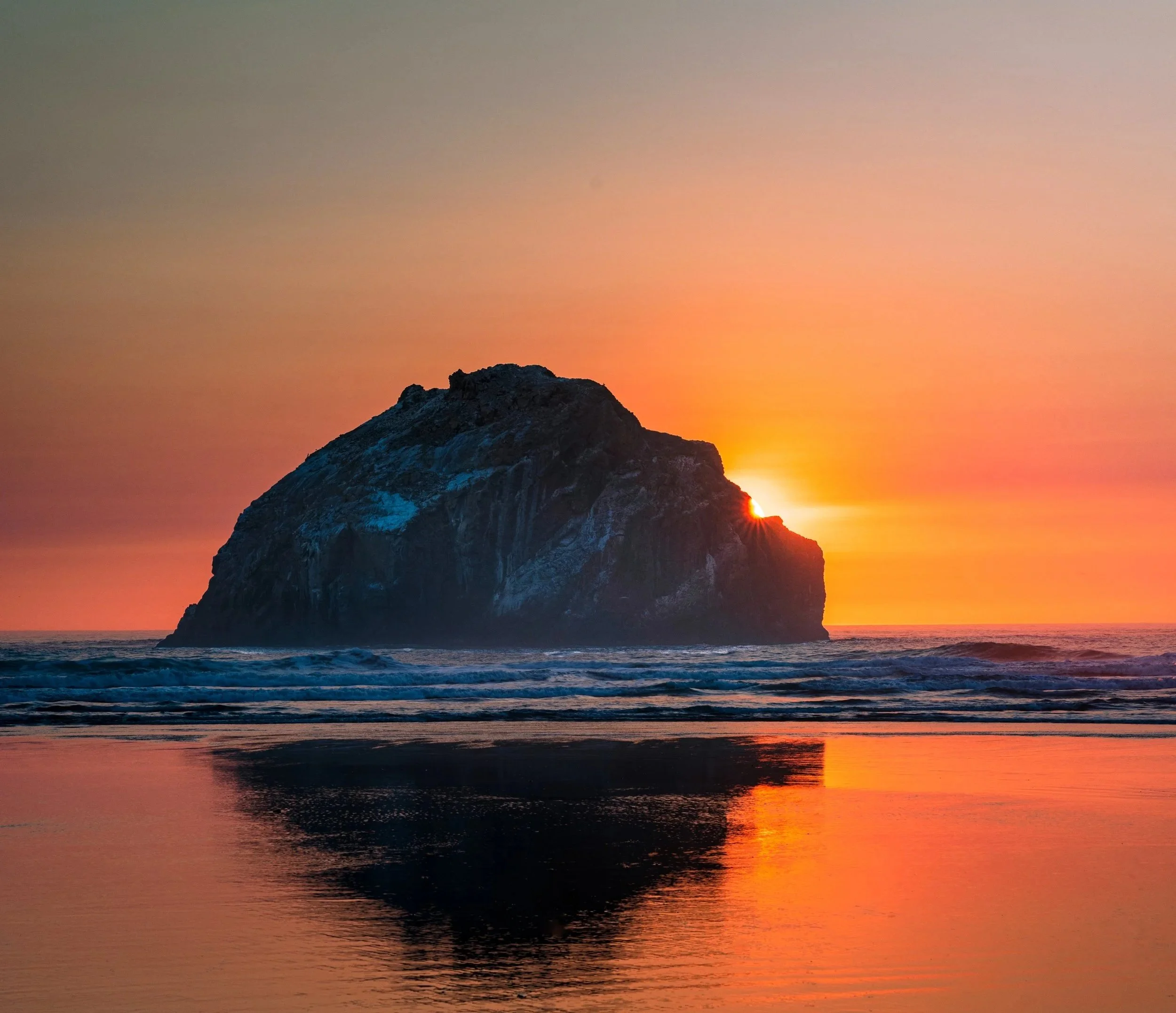
Face Rock at Sunset
1. Use the Beach’s Natural Leading Lines
Face Rock Beach is full of subtle lines that guide the eye if you know where to look.
Receding wave lines: On a falling tide, the thin reflective sheen creates diagonal streaks that naturally point toward Face Rock or the Cat & Kittens. Time your shutter to catch the pullback rather than the incoming wave.
Sand ripples: After a storm or very low tide, ripples form perfect foreground geometry. Position them so they angle toward your main subject.
Rock shadows: Near sunset, long shadows from the smaller sea stacks create dramatic directional lines—use them to steer the viewer’s eye.
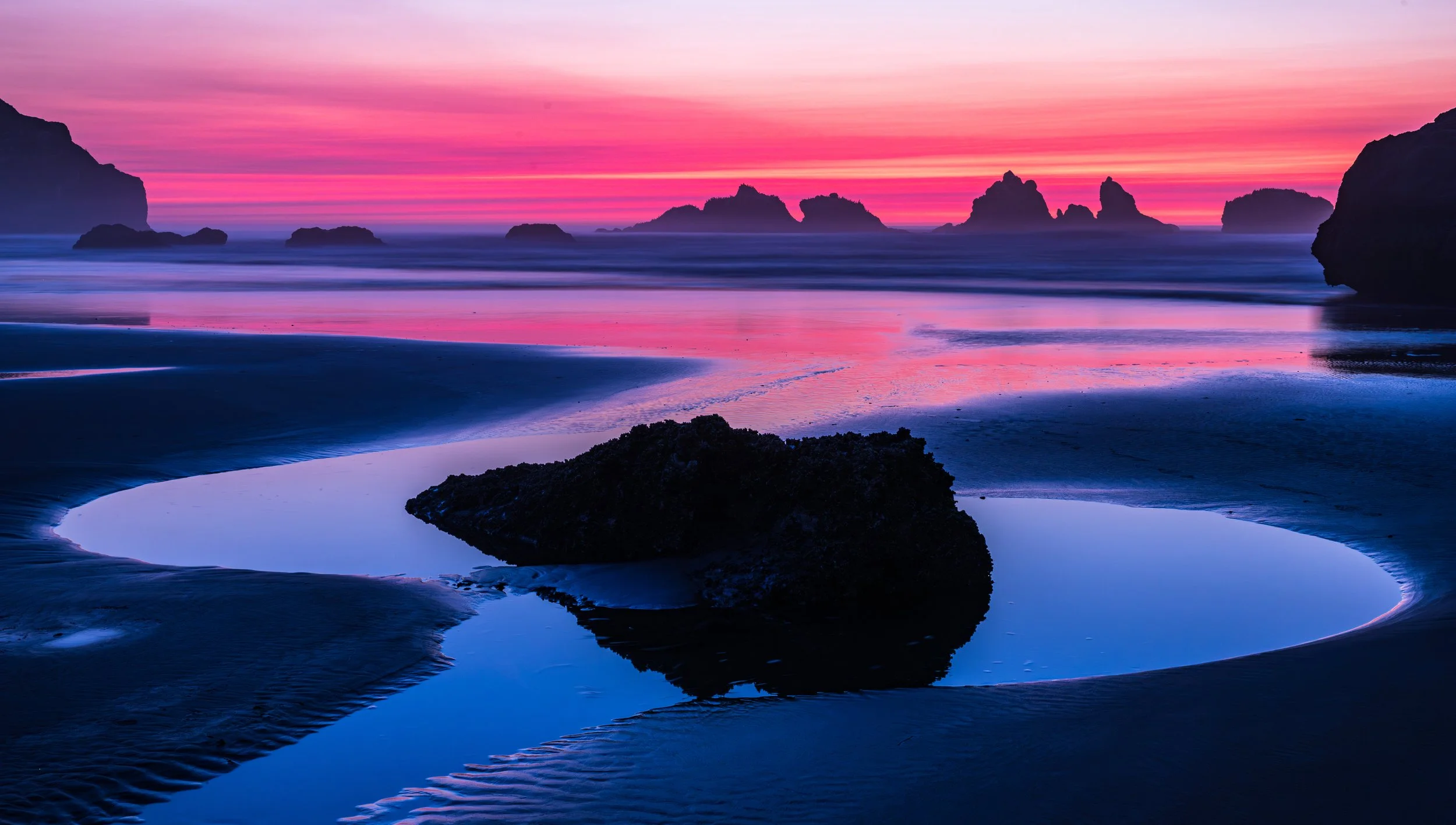
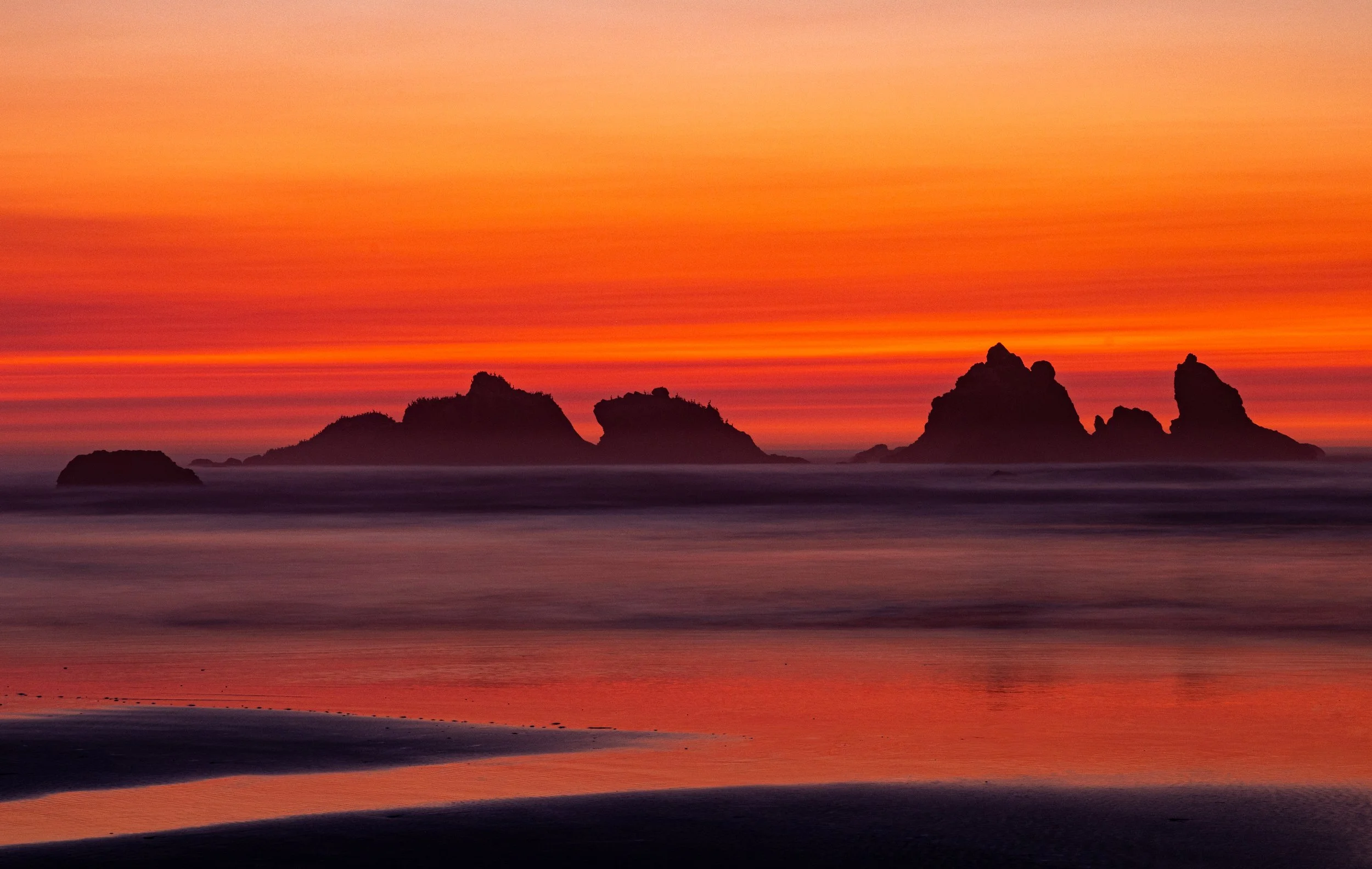
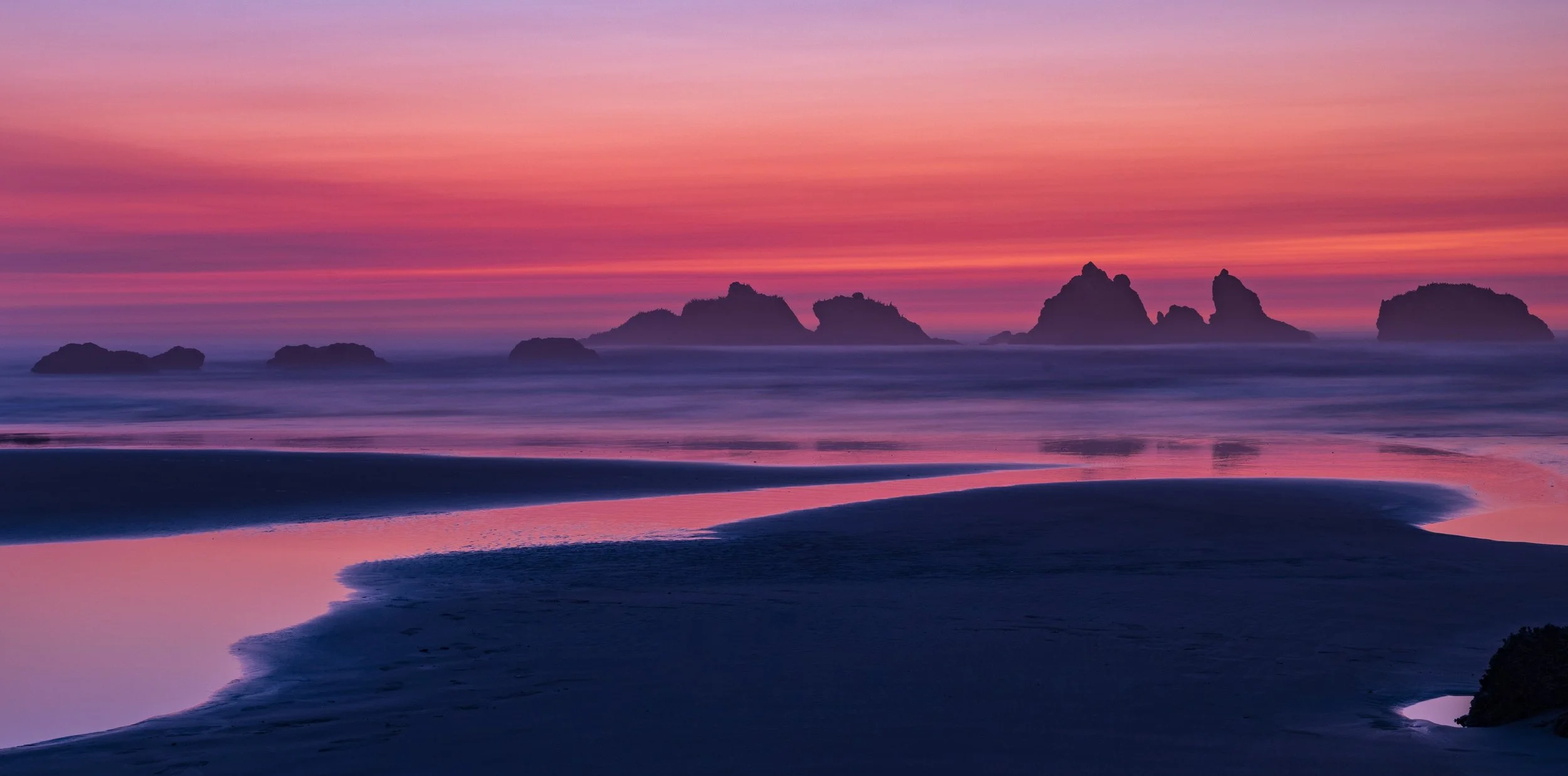
2. Build Depth With Foreground Elements
Face Rock is so visually dominant that many photographers forget to anchor the frame.
Tide pools: At low tide, pools near the base of the stairs create mirror-like foregrounds. A small pool with a clean reflection adds instant depth.
Kelp, driftwood, or foam trails: A single piece of kelp or a foam swirl can add scale and texture without cluttering the frame.
Wet sand reflections: One of Bandon’s superpowers. Step back 10–20 feet from the waterline and use the reflective sheen as a foreground “canvas.”
3. Think About Sun Placement
Face Rock behaves differently depending on the season and cloud cover.
Classic sunset alignment: In winter and early spring, the sun sets farther south, giving you side‑light across the rock’s face—great for texture.
Summer sunsets: The sun moves north and can backlight the sea stacks, creating silhouettes and glowing edges.
Golden hour glow: Even when the sun is behind clouds, the sky often lights up behind Face Rock. Keep shooting after the sun dips; Bandon frequently delivers a second wave of color.
4. Allow the Image to Breathe
Face Rock is visually heavy. Give it space.
Use negative space: A wide sky or a clean stretch of reflective sand helps the composition feel calm and intentional.
Avoid crowding the edges: Let the main stack sit comfortably within the frame—don’t trap it against the border.
Simplify: If the scene feels busy, lower your angle or move a few steps to eliminate competing rocks.
5. Capture Birds for Scale and Life
Face Rock is a bird highway if you pay attention.
Look for cormorants: They often perch on the smaller stacks to the south. A single bird silhouette adds scale and mood.
Shorebirds in the shallows: Sandpipers and plovers run along the reflective waterline—perfect for motion blur or crisp action shots.
Gulls in flight: They frequently cross the sun path during sunset. A well‑timed frame with a seagull adds dynamic energy.
6. Work With the Tide
Tide changes transform the beach more than the weather does.
Low tide: Best for reflections, tide pools, and leading lines.
Incoming tide: Great for wave motion blur and dramatic water movement around the smaller stacks.
High tide: Simplifies the scene—use it for minimalism and silhouettes.
7. Move—Don’t Stay in One Spot
Most visitors shoot from the staircase area. The magic often happens elsewhere.
Walk north for cleaner sand, fewer footprints, and stronger reflections.
Walk south for more dramatic angles on the Cat & Kittens and better bird activity.
Shift your height: A 6–12 inch change in camera height can completely transform the foreground.